
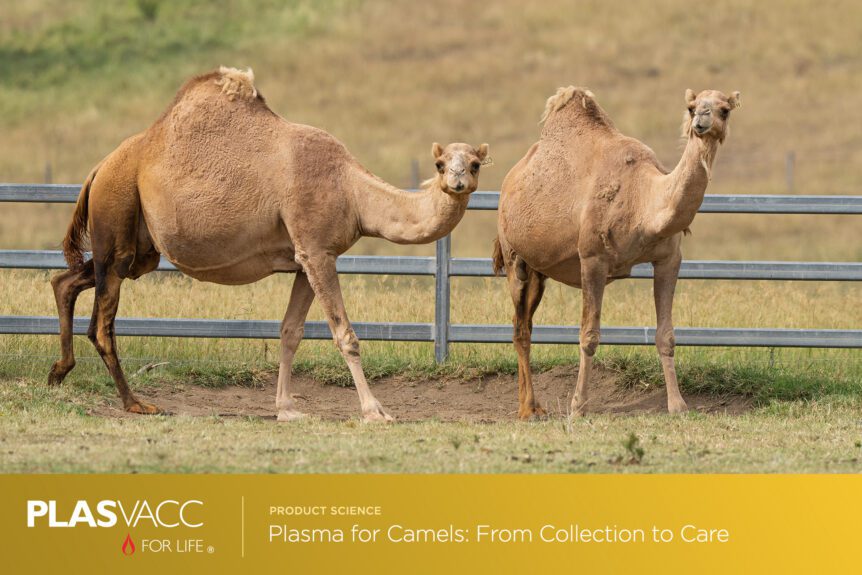
When veterinarians think about plasma therapy, horses and dogs often come to mind first. Camels rarely do. Yet across Australia, camel herds are growing, commercial camel dairies are expanding, and veterinarians are seeing more cases where immune support is critical, particularly in neonatal calves.
Camelid plasma may be less familiar, but the science behind it is well established. And just like equine plasma, what happens before a unit ever reaches a clinic matters just as much as how it’s used.
A Unique Species, Familiar Challenges
Camel calves face many of the same risks seen in other livestock species. Failure of Passive Transfer remains one of the most significant threats to neonatal survival, especially in managed herds where early intervention can make the difference between loss and recovery. Add gastrointestinal disease, systemic infection, or environmental stressors, and immune compromise can escalate quickly.
Camelplas was developed to address those realities, using the same principles applied to equine plasma, but tailored specifically for camelids. It’s a supportive therapy veterinarians can rely on when immunity needs reinforcement and time is limited.
What Makes a Great Camel Plasma Donor?
Unlike horses, camels bring their own set of considerations. Size alone changes the equation.
“Larger camels seem to make the best plasma donors,” explains Rachel Brook, Production Manager at Plasvacc Australia. “Due to their size though, they must be well behaved and quiet natured. Our girls Mac and Cleo are lovely, yet real characters, which always makes a camel collection day fun.”
Temperament is essential. Calm handling, predictable behaviour, and trust in staff are non-negotiable when working with animals of this scale. Health screening is rigorous, but personality determines whether a camel can safely and comfortably become a long-term donor.
Life Outside the Collection Schedule
Camel plasma donation is infrequent, only a few times a year. The rest of a donor camel’s life is spent being a camel.
“Our two camels live together in a scrub paddock with lots of brush and natural forage,” Rachel says. “They also receive lucerne hay regularly and love it when visitors come to meet them with some bread as a special treat.”
Enrichment comes naturally. Swimming and mud baths in their dam help them cool off during summer and act as a natural insect barrier. The environment is intentionally low stress, allowing the camels to express normal behaviours and stay settled year-round.
And yes, they have opinions.
“Everyone is always amazed at how silly characters the camels can be,” Rachel adds. “A bit of rain or waving around a biscuit of lucerne will have them running, bellowing and kicking up their heels. They’re also keen contortionists and often try to shimmy under fences to graze exactly where they want, which is usually the manicured lawn near the office.”
Collection, Without Compromise
When it is time for plasma collection, the process mirrors the same standards used across Plasvacc’s equine and canine programs. Plasma is collected using a closed-system pheresis method, allowing whole blood to be processed, plasma separated, and red cells returned to the donor.
Camels are monitored closely throughout the procedure. Protein levels are tracked, donor welfare is prioritised, and each unit remains single-source and cell-free. Plasma is frozen immediately after collection and stored below -5°C to preserve stability.
Camelplas is produced at Australia’s only APVMA-licensed veterinary plasma facility and is supplied under an APVMA permit, ensuring it meets Australian regulatory requirements.
Built on Familiar Standards
From a veterinary perspective, Camelplas follows a framework clinicians already trust. Donor animals are screened, quarantined, and monitored. Each unit undergoes sterility testing and immunoglobulin verification. No preservatives are added. Sodium citrate is the only anticoagulant used.
What changes is the species. The expectations around safety, traceability, and consistency do not.
For veterinarians working with camels, alpacas, or llamas, that consistency matters. When a camel calf presents compromised, plasma isn’t experimental or improvised, it’s a deliberate, controlled intervention backed by the same standards applied to other species.
From Paddock to Patient
By the time Camelplas arrives at a clinic, it carries more than immune support. It reflects careful donor selection, calm handling, infrequent collection, and daily care that prioritises animal welfare long before treatment is needed.
As Rachel puts it, “Our camels spend most of their time foraging, splashing in the dam, or rolling in the mud. Plasma donation is a very small part of their lives.”
That balance is intentional. And it’s what allows veterinarians to use Camelplas with confidence, knowing the product is as considered as the care it supports.
